
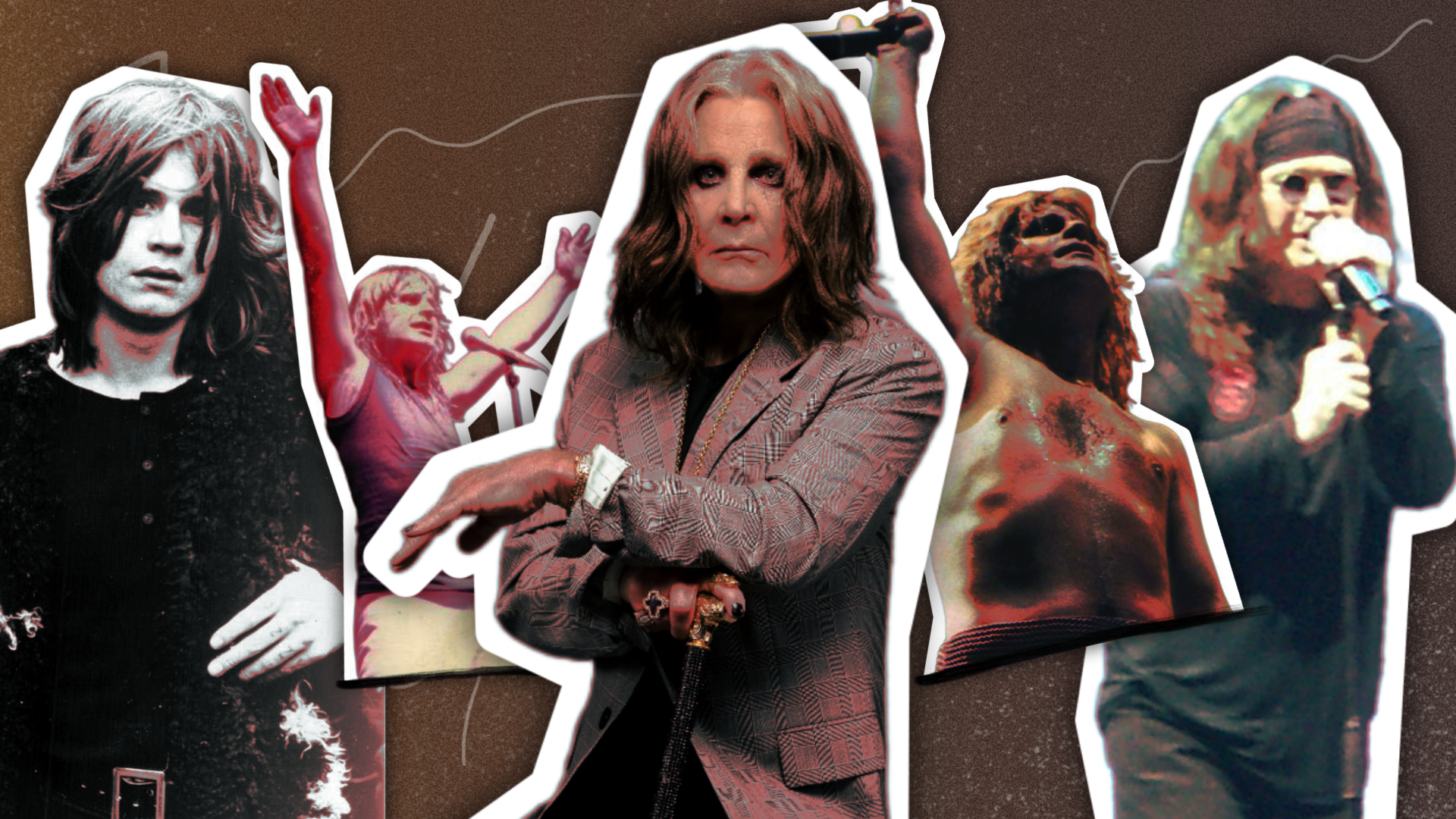
It’s hard to overstate the influence of Ozzy Osbourne—a man who went from the gritty streets of Birmingham to becoming one of the most iconic and beloved figures in music history. For more than five decades, Ozzy wasn’t just part of the conversation about rock and heavy metal—he was the conversation. His voice, persona, and survival instinct carved out a singular legacy that now lives on, long after the final curtain has drawn.
Here’s a look at the incredible timeline of Ozzy Osbourne’s career—from a working-class kid in England to the immortal “Prince of Darkness.”
Related
1948–1967: Born in Birmingham, Raised in Chaos
Born John Michael Osbourne on December 3, 1948, in Aston, a working-class suburb of Birmingham, Ozzy grew up in a crowded house with five siblings and parents who worked tirelessly to make ends meet. The industrial city was gray and tough, and it shaped his worldview early. Ozzy struggled in school due to undiagnosed dyslexia and dropped out at 15, working odd jobs, including a stint in a slaughterhouse—an early glimpse of the macabre imagery that would later define his lyrics.
Music was his escape. He idolized The Beatles and later cited Paul McCartney as the reason he wanted to become a singer. That dream started taking shape in 1968 when he responded to a local ad: “Ozzy Zig Needs Gig.” It led to the formation of a band that would change rock history forever.
1968–1979: The Black Sabbath Years – The Birth of Heavy Metal
With guitarist Tony Iommi, bassist Geezer Butler, and drummer Bill Ward, Ozzy co-founded Black Sabbath. Initially called Earth, the band rebranded after watching a horror film titled Black Sabbath. That moment sparked a new idea: music that sounded as dark and unsettling as the world around them.
Their 1970 self-titled debut introduced the world to a new, heavier sound—doom-laden riffs, occult themes, and Ozzy’s haunting vocals. That same year, they released Paranoid, which became their defining work, spawning rock staples like “Iron Man,” “War Pigs,” and the title track “Paranoid.”
Black Sabbath didn’t just create metal—they invented a new language for rock music. Ozzy, with his wide eyes and raw voice, became the face of it all. The band released several more albums in the ’70s (Master of Reality, Vol. 4, Sabbath Bloody Sabbath) that pushed boundaries, both musically and personally.
But fame came at a cost. By 1979, substance abuse and infighting led to Ozzy being fired from the band he helped create. He later admitted he was in a drug- and alcohol-induced haze for much of the decade, spiraling into a deep depression when it all came crashing down.
1980–1997: Solo Rebirth – The Crazy Train Rides Again
Most artists would crumble after being kicked out of a legendary band. Ozzy doubled down.
With the help of Sharon Arden—his future wife and manager—he launched a solo career that turned him into an even bigger star. His debut album, Blizzard of Ozz (1980), was a revelation. With tracks like “Crazy Train” and “Mr. Crowley,” he reached a younger, wilder audience who embraced him as metal’s unfiltered mouthpiece. Guitar prodigy Randy Rhoads became the perfect sonic partner until his tragic death in a plane crash in 1982.
Despite devastating losses and ongoing battles with addiction, Ozzy kept recording. Diary of a Madman (1981), Bark at the Moon (1983), and No More Tears (1991) produced hits that became rock staples. He didn’t just survive the ’80s—he dominated them. His antics, like biting the head off a dove (and infamously, a bat), only added to the mythos.
By the ’90s, Ozzy was both feared and revered—a metal god and a cartoonish menace to mainstream media. Yet beneath the headlines, his songwriting matured, blending chaos with real vulnerability. Tracks like “Mama, I’m Coming Home” revealed a softer, introspective side of the so-called “Prince of Darkness.”
In 1996, Ozzy launched Ozzfest, a touring festival that spotlighted metal and hard rock acts—from Slipknot to System of a Down.
2002–2005: The Osbournes – Reality TV Royalty
Just when it seemed like Ozzy’s legacy was sealed, he reinvented himself again—this time, on reality TV.
The Osbournes, which premiered on MTV in 2002, pulled back the curtain on rock’s wildest family. Instead of satanic rituals or wild orgies, viewers saw Ozzy fumbling with the remote, arguing with Sharon, and mumbling through domestic life with teenage kids Kelly and Jack. The show was absurd, funny, and weirdly wholesome. It won an Emmy and made Ozzy a household name to a brand-new generation.
He became more than a rock star—he became a cultural icon. His face appeared in commercials, his voice was parodied on South Park, and his struggles became teachable moments for fans watching him battle addiction, tremors, and public scrutiny.
2006–2022: The Final Acts – Legacy, Health Battles, and Resilience
Though his health began to decline in the 2010s—marked by a Parkinson’s diagnosis, spinal surgery, and various injuries—Ozzy continued to record and perform. His 2020 album Ordinary Man and 2022’s Patient Number 9 showed he still had stories to tell and demons to confront. Collaborating with artists like Post Malone, Elton John, and Eric Clapton, he embraced new sounds without losing his essence.
Despite having to cancel tour dates and formally retire from live touring, Ozzy stayed in the public eye. Every appearance, every song release was a reminder: the man who had every reason to burn out long ago was still burning bright.
2025: The Legend Lives On
With Ozzy’s passing at age 76, the world lost a symbol of raw authenticity, survival, and creative chaos. From Black Sabbath to The Osbournes, from biting bats to winning Emmys, his career defied logic and spanned generations.
He was the outcast who became king, the wild card who became a global brand, the troubled soul who became a beacon of honesty in an industry full of masks.
Ozzy Osbourne may be gone, but the echoes of that voice—the one that howled through decades of darkness and light—will live forever.


Leave a Reply