
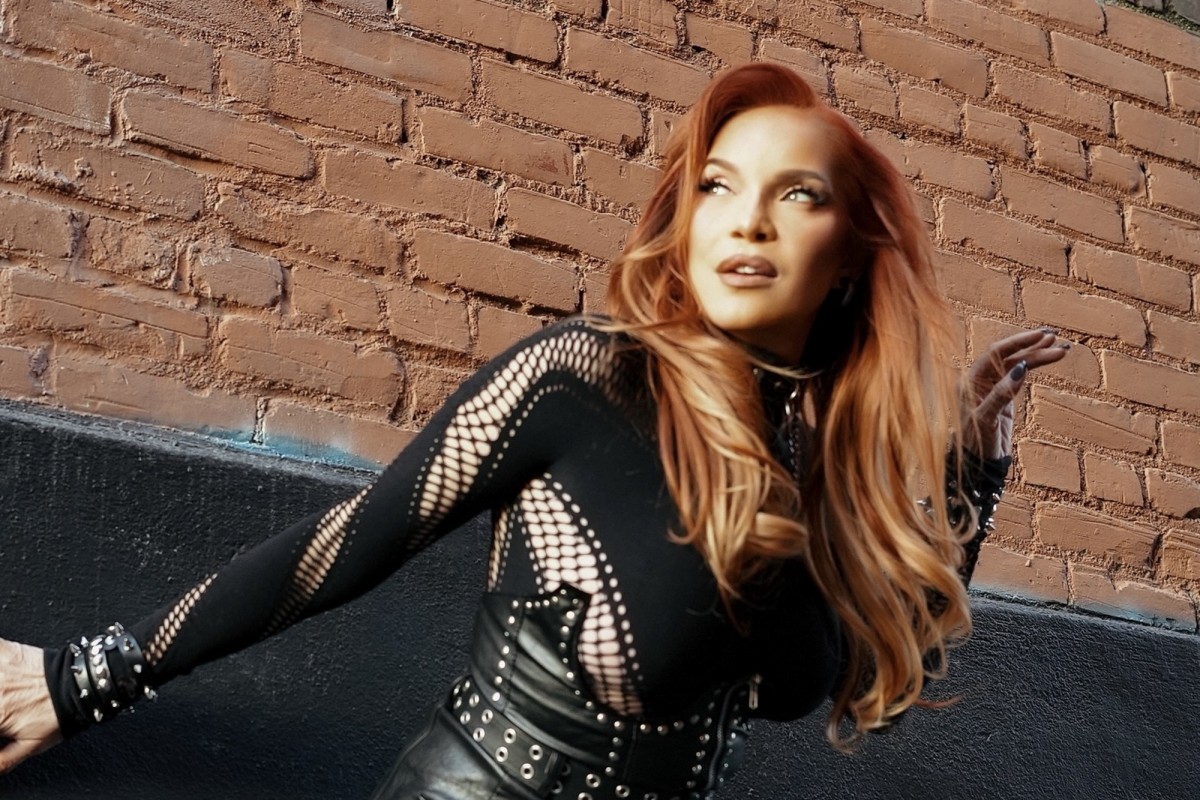
Carmit has spent decades understanding the relationship between music, movement and performance, from the original Pussycat Dolls era to her work as a solo artist, choreographer, producer and creative director. Now, with CARMIT – PART II, she is opening another chapter by returning to songs from her early solo years, reshaping them for the dancefloor and pairing them with music her longtime fans have never heard before.
Released on September 4, the eight-track EP arrived as a birthday gift to the fans who have continued to follow Carmit’s journey beyond one of the defining pop groups of the 2000s. Where CARMIT – PART I explored “daylight and nostalgia” through original recordings from her early solo era, PART II deliberately moves after dark, bringing club-focused remixes, dance energy and new material into the same story.
The decision to split the project into two chapters was practical as much as creative. Carmit had accumulated too many songs for a single EP, so the two-part format gave her room to separate the nostalgic side of her catalog from the remixed, dancefloor-driven material. “To be honest there were too many songs for one EP,” she tells InMusic. “So I kinda created two parts to fit the nostalgia and another one with the remixes with more of a dance floor energy.”
For Carmit, revisiting those older recordings is not about simply looking backward. The songs function as “time capsules,” preserving exactly what she was experiencing before she knew where her career would take her. Listening to them now, she says, comes with affection rather than judgment: “I listen back with love rather than criticism.”
That perspective is central to PART II. Rather than treating her early solo material as something frozen in the 2000s, Carmit has remastered and reworked songs so they can exist in the present while retaining the emotions that shaped their original versions. The EP opens with “Déjà Vu” before moving into a DVKRO remix, while “Fierce” and “Cream” also receive new treatments. Three separate interpretations of “Cream” appear on the project, including a Dance Break Remix, Timmy Fingerz Dance Mix and Derrick Carter Detroit House Mix, while a Timmy Fingerz Dance Mix of “Something ‘Bout You” closes the set.
Dance, naturally, sits at the center of the project. Carmit’s connection to movement predates her recording career by decades: she studied at the Hamilton Academy of Music in Los Angeles and spent 10 years competing internationally as a rhythmic gymnast, placing fifth at the 1992 U.S. Olympic trials. Her athletic training eventually became part of a performance career that included work alongside Michael Jackson, Janet Jackson, Beyoncé and Ricky Martin.
That physical foundation also shaped the earliest version of the Pussycat Dolls. Before the group became a global pop phenomenon, Carmit was part of the original Hollywood burlesque troupe, which began in 1995. She remembers an atmosphere that felt intimate, raw and deliberately underground, with Hollywood industry figures forming much of the audience. “We were creating a movement without knowing that’s what it was yet,” she recalls. “Back then, in the Y2K era, being underground was exclusive. Mainstream wasn’t the vibe the way it is now.”
When the Pussycat Dolls evolved into a recording act, that performance philosophy remained at its core. Carmit points to the group’s “unapologetic female empowerment,” collective talent and ability to give audiences permission to embrace their confidence as key parts of its lasting connection. “Inside everyone is a fearless flame that needs a spark,” she says.
Her perspective on the group has also evolved with time. Carmit says being part of a collective sometimes felt limiting because of the number of controlling factors involved, while her solo career has given her greater freedom to make decisions according to her own creative instincts. Still, she rejects the idea that there was one specific moment when she decided to become a solo artist. “I’ve always been solo, even in the group,” she explains. “I was an individual standing inside a collective.”
That independence now extends across multiple forms of creative work. Carmit has co-produced The Zodiac Show, worked in artist development and continued to explore music, performance and production, but she still sees unexplored territory ahead. Broadway and directing are two areas she hopes to pursue, while she is also developing a new adult resource initiative with Operation Smile, where she serves as Global Ambassador, targeted for launch in October.
Her relationship with visual performance remains just as inseparable from songwriting. When Carmit creates music now, she does not hear a song in isolation; she sees how it moves. “Visuals and choreography go hand in hand with the songwriting for me,” she says.
The next chapter is already taking shape, with a new music video, additional collaborations and a book still in development. “Next year’s going to be a whole new chapter for me,” she teases. For Carmit, the past may provide the material, but the future is where the movement continues.
Scroll down to read the full InMusic interview with CARMIT.
Photos: MICA
Your daily dose of music news, trends, and fresh drops.
InMusic Newsletter
You celebrated your birthday with a gift to your fans: CARMIT – PART II. What does releasing this project at this particular point in your life mean to you?
It’s a full-circle moment of stepping into my power, celebrating growth, and giving back to the fans the original songs they always asked for, adding some never heard before tracks.
CARMIT – PART I leaned into daylight, nostalgia and your early solo recordings, while PART II moves into a much more nocturnal, club-focused world. What inspired you to tell the story in two different chapters?
To be honest there were too many songs for one EP, so I kinda created two parts to fit the nostalgia and another one with the remixes with more of a dance floor energy.
You’ve described PART II as bringing “the night,” but you’ve also included completely new music alongside reimagined versions of older songs. How did you decide which parts of your past to revisit and which new ideas belonged on this project?
I have a bunch of new music I’m working on, but I felt like I needed to release the songs in the vault and build my catalogue first. Remastering older songs to feel new, alongside unreleased tracks that still feel relevant.
Some of these recordings date back to your early solo era. When you hear your younger self on those tracks today, what do you hear that you perhaps couldn’t recognize at the time?
They’re like time capsules. Everything I was feeling in that exact moment, before I knew what was coming.That’s what makes them so raw and also timeless. I listen back with love rather than criticism.

Dance music and performance have been part of your life for decades. What is it about the dancefloor that continues to draw you back creatively?
It’s my first love! Dance is therapy and freedom. Also that’s what a lot of my fans know me for, so I wanted to give them this. Just like Miley Cyrus‘s new song the kids don’t dance anymore and they need to!
That connection between music, movement and performance has been central to your career from the very beginning. Before the Pussycat Dolls became a global pop phenomenon, you were already part of the group’s original burlesque beginnings. When you look back at that early period, what do you remember most vividly?
There was just this raw, intimate energy in the room. We were creating a movement without knowing that’s what it was yet and our audience was the Hollywood industry, which is what made it feel so underground. Back then, in the Y2K era, being underground was exclusive. Mainstream wasn’t the vibe the way it is now.
The Pussycat Dolls became one of the defining groups of the 2000s. From your perspective, what do you think made the group connect so strongly with audiences around the world?
Unapologetic female empowerment, a caliber of the collective talent and performance, and of course giving people permission to tap into their own inner confidence to be fully expressed! Inside everyone is a fearless flame that needs a spark.

Looking at your career as a whole, how have your perspective and creative pursuits changed from your Pussycat Dolls years to where you are now as a solo artist?
Being in a group felt more limiting than freeing. There were a lot of controlling factors. Now I get to create and do things on my own terms, aligned with my soul.
You’ve worked across so many different sides of the entertainment industry — from performing and songwriting to choreography and producing. Is there a part of your creative identity that you feel you haven’t explored enough yet?
I’ve produced and co-created The Zodiac Show, and I have done artist development for years. What I haven’t done yet is Broadway and directing. I think we all have many hats and I’m looking to explore more in this next chapter! Something exciting I’ve been working on for a while is this new initiative for an adult resource with Operation Smile. We are looking to launch in October!

Your career has taken you from performing alongside some of the biggest artists in the world to developing your own solo material. Was there a particular moment when you realized you wanted to build something that was entirely your own?
I don’t think there was ever a single moment I ‘decided’ I’ve always been solo, even in the group. I was an individual standing inside a collective.
The music industry has changed dramatically since the Pussycat Dolls first emerged. What do you think has changed for the better, and what do you miss about that era?
The landscape has completely changed…how people create to how people consume. Sure, there’s more creative control if you go independent. But it’s harder to make a living, the industry’s oversaturated, and now you’re competing with AI. It’s a whole different game.
Fans continue to revisit the Pussycat Dolls’ music years after its release. When you see the impact those songs still have today, does it change the way you think about that chapter of your career?
Being a part of the eras makes me proud of my contribution to the legacy! I think we made our stamp on pop culture.

You’ve always had a strong connection between music, movement and visual performance. When you create music today, do you still think about the choreography and visual world at the same time as the song itself?
Absolutely. Visuals and choreography go hand in hand with the songwriting for me. I can’t really separate them. While I’m writing, I’m already picturing how it moves.
With PART II now out, can you give us any hints about what you’re working toward next? Are you thinking about a full-length project, more singles, or something outside of music?
New music video, more collaborations, my book is still in the works too. Next year’s going to be a whole new chapter for me…so stay tuned!
If you could go back and give the Carmit who was just beginning her career one piece of advice, knowing everything you know now, what would you tell her?
Trust your timing, take the lessons, and do the work to stay true to your intention. Own your unique light and never shrink yourself to fit into anyone else’s box. Like a diamond, it takes pressure to become brilliant.


Leave a Reply