
The 2026 Met Gala set a clear challenge: translate “Costume Art” into something that feels museum-worthy, not just red carpet-ready. With the “Fashion Is Art” dress code pushing guests toward sculptural storytelling, some artists delivered defining moments—others struggled to move beyond concept into execution.
Lisa — Best
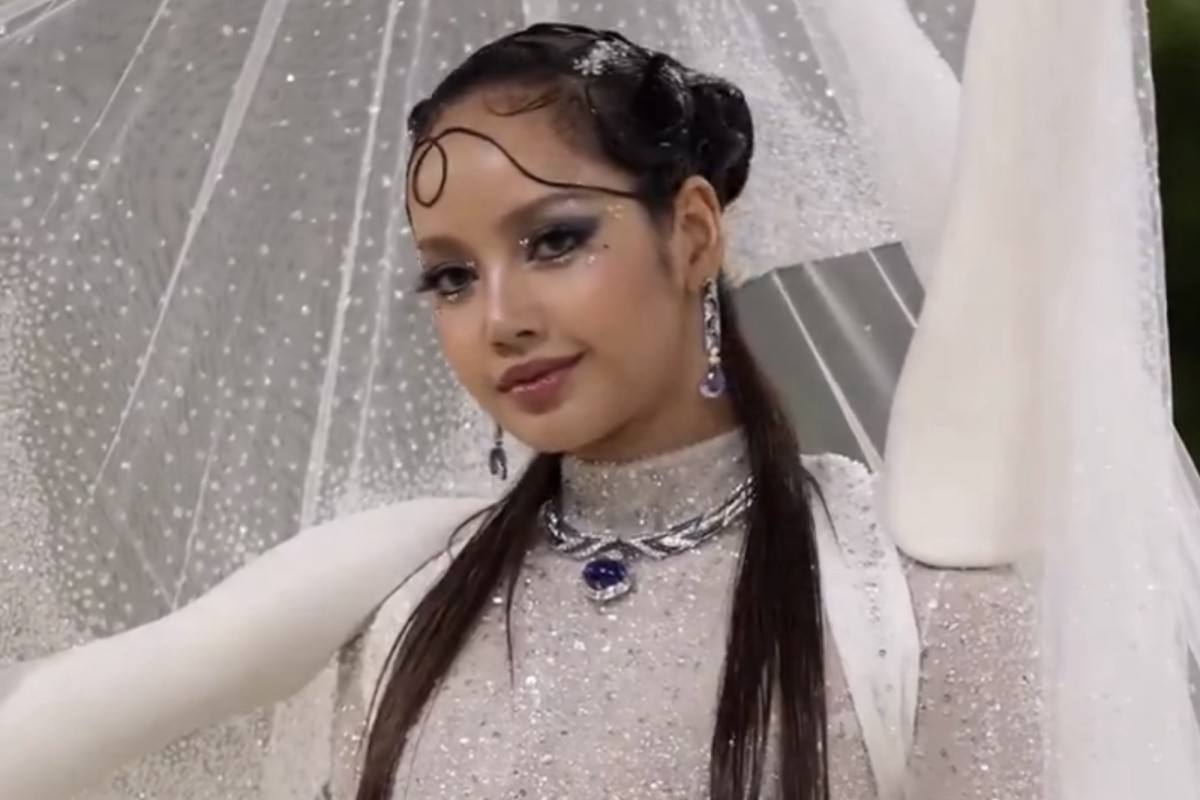
Lisa didn’t just follow the theme—she embodied it. Serving as a co-chair, she arrived in a surreal Robert Wun couture piece that instantly became the night’s visual centerpiece. The angelic white gown featured two sculpted arms modeled after her own, posed in traditional Thai dance positions while lifting a sheer veil.
Nothing about the look felt accidental. Every detail reinforced the idea of the body as both subject and medium, turning Lisa into a literal living sculpture. In a night built around artistic interpretation, this was the clearest, most complete translation of the brief.
Beyoncé — Best
A decade after her last appearance, Beyoncé returned with intent. Wearing custom Balmain by Olivier Rousteing, she stepped onto the carpet in a bejeweled, skeleton-inspired gown paired with a towering feathered cape.
Anatomy became spectacle. The design framed the body as architecture, aligning perfectly with the exhibition’s focus on form and structure. Joined by Jay-Z and Blue Ivy—making her debut—Beyoncé turned a comeback into a generational moment without losing technical precision.
Rihanna — Worst
Expectations for Rihanna are always sky-high, which made this year’s result more surprising. Arriving in Maison Margiela by Glenn Martens, she wore a heavily embellished, cocoon-like structure layered over a sequined base.
Volume overtook clarity. The silhouette felt disconnected from both her frame and the theme, reading more as weight than intention. For an artist known for redefining the Met, this landed as one of her rare misfires.
Bad Bunny — Best
Bad Bunny approached the theme from an unexpected angle: time. His prosthetic transformation into an elderly version of himself, paired with a weathered, vintage-style suit, explored aging as wearable art.
Commitment carried the concept. Rather than relying on surface-level drama, the look told a story about the body evolving, decaying, and reshaping itself. Few attendees pushed the theme into narrative territory this convincingly.
Sabrina Carpenter — Best
Sabrina Carpenter delivered one of the smartest interpretations of the night. Her Dior halter gown, designed by Jonathan Anderson, was constructed entirely from physical film strips featuring scenes from the 1954 film Sabrina.
Cinema met couture in a way that felt playful but precise. The look connected fashion history with visual storytelling, aligning seamlessly with the exhibition’s premise while staying true to her polished pop persona.
Karina — Best
Karina opted for restraint—and it paid off. Her Prada gown drew from traditional hanbok silhouettes, blending white satin with a structured black cape and tablier neckline.
Elegance became the statement. Instead of chasing spectacle, she delivered a refined interpretation of heritage as art, proving that minimalism can still command attention when executed with clarity.
Katy Perry — Worst
Katy Perry’s astronaut-inspired concept hinted at ambition but never fully materialized. The white Stella McCartney gown, paired with a helmet-style mask and six-finger gloves, leaned into novelty without a clear artistic throughline.
Execution diluted the idea. The mix of bridal minimalism and sci-fi gimmickry lacked cohesion, resulting in a look that felt surprisingly restrained given her history of bold Met statements.
Jisoo — Best
Jisoo’s Dior debut leaned into soft power. The pastel pink and lavender gown embraced an ethereal, almost painterly aesthetic that highlighted proportion and movement.
Timeless femininity anchored the look. While less conceptual than others, it translated the idea of the body as art through grace and balance rather than theatricality.
Cardi B — Worst
Cardi B’s Marc Jacobs design, inspired by surrealist artist Hans Bellmer, checked the thematic box on paper. The final result, however, struggled to translate that influence into a flattering or coherent silhouette.
Concept overwhelmed form. The intricate details clashed rather than complemented, creating visual noise instead of a unified artistic statement.
Tyla — Best
Tyla continues to treat the Met carpet as a stage for transformation. Her custom Valentino look by Alessandro Michele combined a crystal-heavy bodice with ornate silver detailing and a teal satin skirt inspired by peacock tones.
Texture drove the impact. The layering of materials created a dynamic, almost kinetic effect under flashes, reinforcing her ability to turn maximalism into something controlled rather than chaotic.
EJAE — Best
EJAE’s Swarovski crystal gown leaned fully into craftsmanship. The fitted silhouette, paired with a braided updo threaded with crystals, delivered a cohesive, polished debut.
Embed from Getty ImagesSam Smith — Worst
Sam Smith aimed for gothic drama in a custom Christian Cowan gown, complete with heavy embellishment and a mermaid silhouette. The intention was clear, but the execution veered into costume territory.
Tone became the issue. The all-black palette flattened the design’s impact, while the theatrical elements felt disconnected from the refined artistry dominating the night.


Leave a Reply