
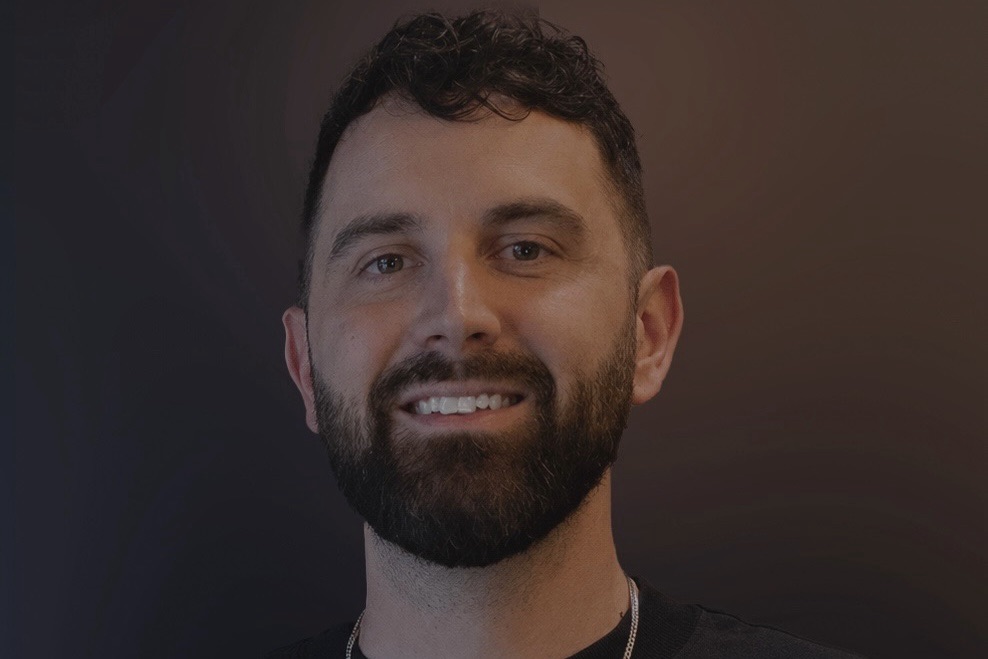
Ryan Curtis has built his K-pop songwriting career around a simple idea: the best song does not have to follow a fixed formula. From his first K-pop release, Taemin’s “Under My Skin,” to collaborations with ENHYPEN, IVE, NCT DREAM, NCT 127, YEONJUN, FIFTY FIFTY and ALPHA DRIVE ONE, the songwriter has become part of a growing international creative network that thrives on experimentation, scale and unexpected combinations.
That journey reached another major milestone with ENHYPEN’s new album, THE SIN : BLISS, which debuted at No. 1 on the Billboard 200 and generated more than 1.7 million sales worldwide on its first day. Curtis co-wrote two songs on the project, including “Bloody Paradise,” the album’s title track, and “STUCK,” giving him two very different entry points into a record that quickly became one of the biggest releases of ENHYPEN’s career.
For Ryan Curtis, however, the numbers arrive long after the creative work is finished. A song that eventually reaches millions of listeners begins much more quietly, often with a melody being rewritten repeatedly, a lyric being questioned or a production slowly taking shape in a songwriting room. That contrast between the intimacy of creating music and the enormous scale of K-pop is one of the things that continues to draw him back to the genre.
“Bloody Paradise” was particularly deliberate from the beginning. Curtis reunited with Julia Lewis after several years apart, with the specific goal of creating ENHYPEN’s next single. The ambition was clear: make something big, different and impossible to overlook. “STUCK,” by comparison, emerged from a looser process, without the same expectations attached to a lead single.
That distinction offers a glimpse into how Ryan Curtis approaches writing for established artists. Rather than imposing his own identity onto every project, he starts with the artist, considering the sound they have already created and the world their audience expects from them. His own instincts still find their way into the finished record through melodies, lyrics and creative choices, but the balance is in making those contributions feel natural to the artist.
His experience across K-pop and Western pop has also exposed him to fundamentally different ways of building songs. K-pop sessions frequently begin with highly developed tracks, leaving writers to discover the melody, lyrics and emotional direction that belong on top. Western pop sessions, meanwhile, can begin with little more than a chord, a title or a loose concept before the room builds the entire song from the ground up.
Working internationally has reinforced the value of staying flexible. Different writers can hear rhythm, melody and emotion in radically different ways, and Curtis sees those differences as opportunities rather than obstacles. The willingness to abandon an idea when someone else finds a stronger melody or direction has become an important part of his process.
Commercial success has followed that approach. “OMG!” from ALPHA DRIVE ONE’s UNBREAKABLE: BEAST sold 785,000 copies on its first day, while “Bloody Paradise” helped ENHYPEN secure a Billboard 200 No. 1. Curtis says those numbers are rewarding, but they remain separate from the creative decisions made inside the studio. The song comes first; everything that happens afterward is the result of allowing that song to find its audience.
With more releases already in the pipeline, Ryan is entering another phase of a career that continues to move between K-pop and other genres. He remains interested in pop, R&B, dance, darker records and stranger ideas, with no desire to repeat the same creative formula twice.
Keep scrolling to read our full conversation with Ryan Curtis, as he opens up about his K-pop songwriting journey, working with ENHYPEN and the stories behind “Bloody Paradise” and “STUCK.”
Your daily dose of music news, trends, and fresh drops.
InMusic Newsletter
You’ve worked across a wide range of K-pop releases. What was it about K-pop songwriting that first drew you into the scene, and what keeps you coming back to it?
Honestly, I think it was the freedom. K-pop lets you get away with a lot creatively. You can have a massive chorus, a weird switch-up, something super melodic, something darker, something almost theatrical, and somehow it all still makes sense. What keeps me coming back is probably the scale of it too. You make a song in a room with a couple people or solo, then months later there’s a huge video, choreography, performances, fan edits, all of that. It’s kind of insane watching something that started as a demo turn into this whole world.
You’ve collaborated with artists from ENHYPEN and IVE to NCT DREAM, NCT 127, YEONJUN, FIFTY FIFTY, Taemin and ALPHA DRIVE ONE. Is there one collaboration that holds a particularly special place in your heart, and why?
Different songs mean different things to me.
Taemin’s “Under My Skin” will always be special because that was literally my first K-pop release. Then “Bills” with ENHYPEN was a big one because I feel like that opened the door to a whole run of records after that. And obviously “Bloody Paradise” is a huge moment for me because it became the title track on a No. 1 Billboard 200 album and broke a bunch of records for ENHYPEN. So it’s hard to pick one. They all kind of represent different chapters.
Recently, you worked on ENHYPEN’s new album “THE SIN : BLISS.” The project reached No. 1 on the Billboard 200 and delivered more than 1.7 million sales worldwide on its first day. What does it feel like to see songs you helped create reach an audience on that scale?
It’s crazy. I definitely pay attention to the numbers and the records it keeps breaking, whether that’s show wins, streaming or charting. It’s amazing. But when you’re actually making the song, none of that exists yet. You’re sitting there fighting with yourself over a melody or changing one word twenty times. Then months later you see 1.7 million first day or No. 1 on Billboard and you’re like, okay, that’s pretty wild. I let myself enjoy it. You work for years for moments like that, so I think you should.
You co-wrote both “Bloody Paradise,” the album’s title track, and “STUCK. ” How did those two songs come together, and what was different about writing the lead single compared with a B-side?
“Bloody Paradise” was really intentional. Julia Lewis and I had reconnected after not working together for a few years, and we literally said, let’s make ENHYPEN’s next single. So with that one, there was definitely more of a target. We wanted it to feel big, different and really undeniable. “STUCK” was way looser. We were just making something we liked without that same pressure hanging over it.
When you’re writing for an artist or group like ENHYPEN, how do you balance bringing your own songwriting identity to the record with capturing the artist’s sound and identity?
I definitely think about the artist first. You want the song to feel natural for them, fit the world they’ve already built, and ultimately give the fans something that feels exciting but still true to who the artist is.
At the same time, I think every writer naturally brings a little bit of themselves into the room through melody, lyrics or instinct. The goal is really just finding that balance where it feels completely right for the artist, but still has something fresh in it. That’s usually the sweet spot for me.
You’ve worked with both K-pop and Western artists throughout your career. What are some of the biggest differences you’ve noticed between the two creative processes, particularly when it comes to songwriting sessions and developing a song?
A lot of K-pop starts with really developed tracks. Sometimes I’ll get something where the production and structure are already pretty much there, and my job is to figure out the melody, lyric and overall feeling that belongs on top of it.
K-pop can definitely start from scratch too, but more often than not I’m writing to a track that’s already pretty developed. With Western pop, I feel like we’re more likely to start with almost nothing, maybe a chord, a title or a small idea, and build the song from the ground up. They’re different processes and use different creative muscles, which is part of why I really enjoy working in both.
K-pop often involves writers and producers from different countries and creative backgrounds working together. What have you learned from those international writing rooms that has changed the way you approach songwriting?
I think the biggest thing I’ve learned is to stay really open. People from different countries can hear rhythm, melody and even emotion in completely different ways, and that can push a song somewhere you never would have taken it on your own.
It’s also made me much less attached to any one idea. If somebody has a better melody, lyric or direction, that’s where the song should go. At the end of the day, everyone in the room is trying to get to the same place, which is the best version of the song.
“OMG!” from ALPHA DRIVE ONE’s album sold 785,000 copies on its first day, while “Bloody Paradise” helped lead ENHYPEN to a Billboard 200 No. 1. Does seeing numbers like these change the way you think about the songs after you’ve finished writing them, or do you try to separate yourself from the commercial side?
When I’m actually making a song, I’m never thinking about numbers. I’m just focused on making something I genuinely love and trying to get the song to the best place it can be. When the song eventually comes out and connects on that kind of scale, of course it’s incredibly rewarding and I’m very grateful for it. But I try to keep that part separate from the creative process. For me, the song always has to come first.
You’ve already worked with so many major K-pop artists. Who and what are you currently working on that you can talk about? Can you give us a little sneak peek at what’s coming next?
There’s honestly a lot more coming this year that I’m really excited about. I can’t say too much yet because a lot of it is still under wraps, but there are definitely some releases on the way that I’m really proud of.
It’s a mix of K-pop and other projects, and I think people are going to hear a few different sides of what I’ve been working on. I wish I could say more, but for now I’ll just say there’s a lot still to come.
Looking ahead, are there particular artists, genres or creative directions you haven’t explored yet that you’re especially excited to pursue?
I definitely want to keep growing within K-pop because I love that world, but I also love jumping between different styles. Pop, R&B, dance, darker records, weirder ideas, whatever feels exciting that day.
That variety is a huge part of why I love songwriting. I never want to feel like I have to make the same song twice. I can wake up tomorrow inspired by something completely different from what I made yesterday, and that freedom keeps the process exciting. More than anything, I just want to keep making great songs with artists who are open to trying something new.


Leave a Reply