
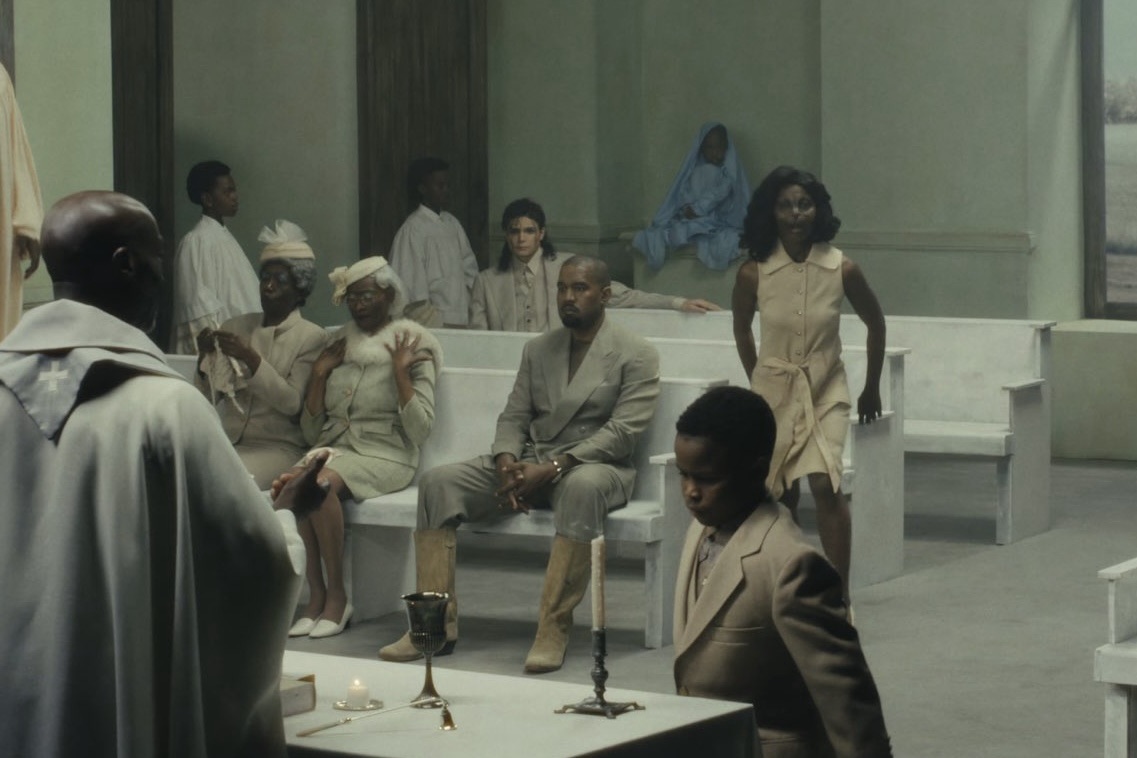
Kanye West (aka Ye) has been ordered to pay $438,558 in damages after a jury found he infringed copyright during his 2021 DONDA listening event in Atlanta, marking a rare legal ruling tied directly to the rapper’s stadium-scale preview culture. The decision centers on the unauthorized use of an unreleased demo that was sampled in an early version of “Hurricane,” played in front of roughly 40,000 fans.
The case adds a legal footnote to one of the most theatrically ambitious album rollouts of the last decade, where unfinished music was turned into a public spectacle.
The disputed material dates back to Ye’s DONDA era in 2021, when he staged a series of stadium listening events ahead of the album’s release. At Atlanta’s Mercedes-Benz Stadium, he previewed evolving versions of tracks that would later become central to the final record, including “Hurricane,” which ultimately featured The Weeknd and Lil Baby and went on to win a Grammy.
One early iteration, often referred to informally as “80 Degrees,” contained a sample drawn from an unreleased demo track provided during early production discussions. Jurors concluded that its inclusion in the live performance constituted copyright infringement, even though the sample did not remain in the commercially released version of DONDA.
Court documents detailed how producers shared a track known as “MSD PT2” with Ye’s creative team during initial sessions. The plaintiffs argued the material was used without finalized clearance or a completed agreement governing its public performance.
Ye’s side maintained that standard clearance procedures were underway and that negotiations over splits and credit were ongoing at the time of the stadium event. Although a judge later narrowed the scope of the lawsuit by dismissing claims tied to the album’s final masters, the live-use question remained at the center of the trial.
The jury ultimately sided with the plaintiffs on that point, awarding $438,558 in damages tied specifically to the performance in Atlanta.
During proceedings that began in early May, Ye testified in court, describing his creative process as fluid and frequently revised in real time. He stated he did not recall every detail of the clearance timeline and emphasized that he often adjusts recordings even after they are initially presented.
He also told the court that his team attempted to secure rights in good faith and characterized his approach to collaboration as “very generous,” while acknowledging that the track was performed publicly before a formal agreement was completed.


Leave a Reply