
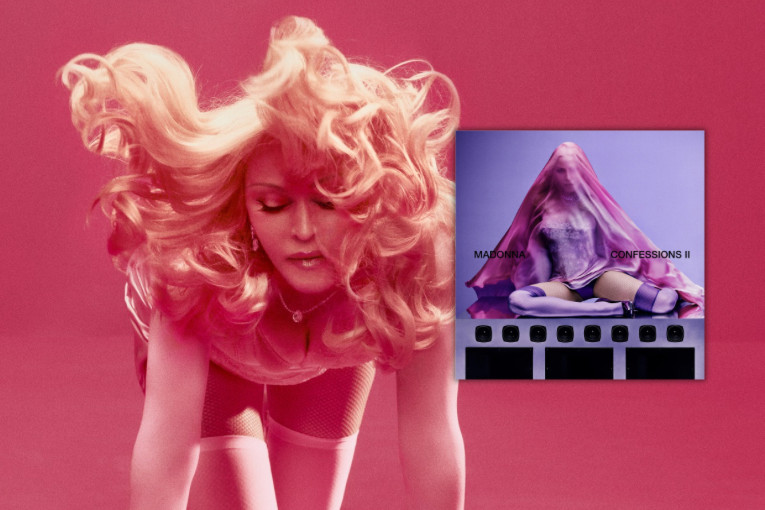
More than two decades after Confessions on a Dance Floor redefined dance-pop, Madonna returns to the club with Confessions II, an ambitious sequel that embraces its predecessor’s DNA while finding room for new collaborators, personal reflection, and modern electronic influences. The result is a record that rarely stands still, flowing as one continuous mix while balancing euphoric highs with more intimate moments.
Rather than treating the original album as something to replicate, Madonna and longtime collaborator Stuart Price approach Confessions II as an evolution. Written after the pair reunited during the Celebration Tour, the album draws inspiration from Chicago house, Detroit techno, and the communal release of the dance floor, while also carrying the emotional weight of family loss and personal healing.
The album wastes no time establishing its identity. Opening cuts “I Feel So Free” and “Good For The Soul” immediately deliver pounding four-on-the-floor beats, shimmering synths, and the nonstop club momentum that made Confessions on a Dance Floor so beloved. Price’s seamless transitions return throughout the project, allowing each song to bleed naturally into the next and making the album feel less like a playlist than a carefully constructed DJ set.
Momentum briefly slows with “One Step Away.” Clocking in at over four minutes, the song stretches its central idea longer than necessary, becoming one of the few moments where the record loses some of its urgency. Fortunately, the pace quickly recovers thanks to “Bring Your Love,” one of the album’s undeniable highlights. Sabrina Carpenter fits naturally into Madonna’s world, and the chemistry between the two transforms the collaboration into a sparkling dance-pop moment packed with irresistible hooks and infectious energy.
The celebration continues through “Danceteria,” which openly nods to Madonna’s own catalog. Its driving synth bassline, bright percussion, and club-ready vocal delivery immediately recall “Into the Groove,” a connection the Queen of Pop acknowledges herself by singing, “I just want to lose myself in the groove.” Instead of feeling nostalgic for nostalgia’s sake, the reference works as a bridge between two different eras of her career.
Elsewhere, “Read My Lips” successfully introduces Latin influences alongside Feid, expanding the album’s sonic palette without disrupting its continuous flow, even if the track lingers slightly longer than it needs to. Collaborations with Martin Garrix, Stromae, and Lourdes Leon further reinforce the album’s willingness to move between commercial dance music and more emotionally driven songwriting.
As the record reaches its closing stretch, Madonna gradually steps away from peak-hour club energy. “The Test,” featuring Lourdes Leon, offers one of the album’s most personal moments before “L.E.S. Girl” closes the experience on a quieter note. Ending with the line, “Everything fades away,” Madonna reminds listeners that even the biggest parties eventually come to an end.
Confessions II doesn’t attempt to outdo its predecessor at every turn. Instead, it expands its ideas with confidence, proving that Madonna can still command a dance floor while embracing where she is today. Keep scrolling below to discover our complete ranking of all 16 songs from Confessions II.
Related
Score:


Leave a Reply